

The Dallas-Fort Worth Metroplex continues to experience unprecedented growth, and with it comes a booming home remodeling market that’s evolved significantly from previous years. As we navigate through 2025, homeowners across Dallas, Plano, Frisco, and surrounding communities are making substantial investments in their properties — not just to keep pace with rising home values, but to create spaces that truly reflect how we live today.
Unlike the pandemic-era remodeling frenzy that saw rushed projects and material shortages, 2025 marks a return to thoughtful, well-planned renovations. Homeowners are prioritizing quality over speed, working with experienced design-build firms like 123 Remodeling to create spaces that balance timeless appeal with contemporary functionality. The market has stabilized in many ways, yet new challenges and opportunities have emerged that every homeowner should understand before breaking ground on their next project.
This comprehensive guide examines the current landscape of home remodeling in Dallas — from what you’ll actually pay for quality work to how long you should realistically expect your project to take. We’ll explore the design directions that are shaping Dallas interiors in 2025, provide a practical checklist for project preparation, and look ahead to what 2026 might bring. Whether you’re considering a kitchen remodel, bathroom renovation, or a whole-home transformation, understanding these realities will help you make informed decisions and set realistic expectations.
Expected Costs in 2025
The cost landscape for Dallas home remodeling has reached a new equilibrium in 2025, settling after the volatility of recent years. While prices haven’t dropped to pre-pandemic levels, the wild fluctuations have largely subsided, creating a more predictable — if elevated — pricing environment. Understanding these costs requires looking beyond simple square footage calculations to consider the quality levels, material choices, and complexity that define modern renovations.
For kitchen remodeling, Dallas homeowners should expect to invest between $45,000 and $120,000 for a complete transformation of a standard 150-200 square foot space when working with a reputable design-build firm. This range reflects the reality of quality construction and materials — Cambria or Caesarstone quartz countertops run $95-$150 per square foot installed, while custom cabinetry from manufacturers like Dura Supreme or Wellborn Cabinet typically costs $500-$900 per linear foot. The investment includes far more than just visible finishes: proper structural modifications, updated electrical systems to handle modern appliances, plumbing relocations, and the invisible but critical work of ensuring everything functions flawlessly for decades.
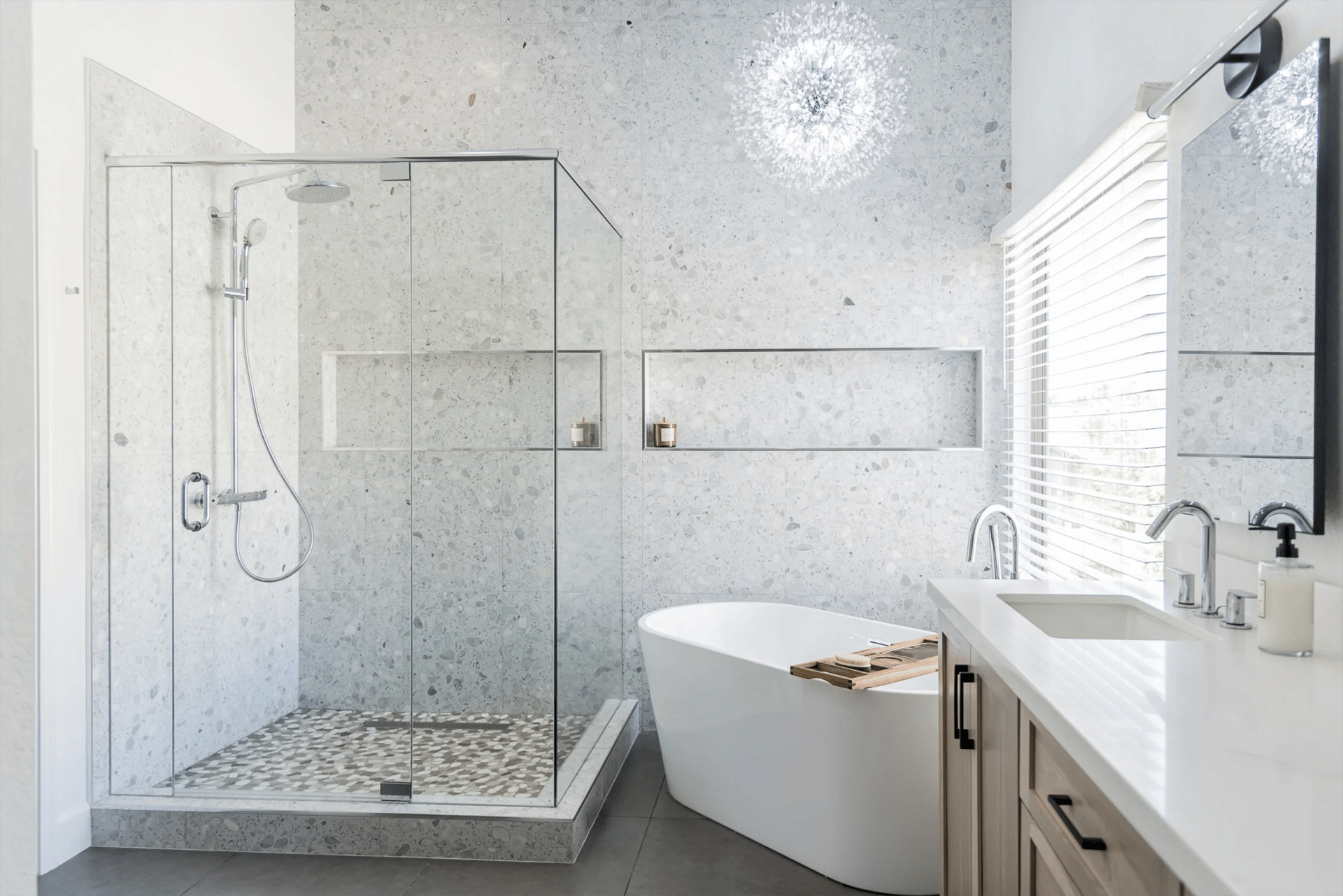
Bathroom renovations show similar patterns, with master bath remodels ranging from $30,000 to $65,000 for spaces between 100-150 square feet. The wide range reflects choices like standard alcove tubs versus freestanding Kohler or Victoria + Albert soaking tubs, or builder-grade fixtures versus luxury brands like Brizo or Grohe. Guest bathrooms typically run $28,000-$55,000, depending on finishes and fixture quality. According to data from the National Kitchen & Bath Association, luxury bathroom renovations in major metro areas have seen labor costs stabilize at approximately 40-45% of total project costs in 2025, with materials comprising the remainder.
Expert Tip: The biggest cost surprise most homeowners encounter isn’t in the finishes they select — it’s in the hidden infrastructure work revealed during demolition. In Dallas’s older neighborhoods like Highland Park and University Park, we routinely discover outdated plumbing, insufficient electrical capacity, or structural issues that weren’t visible during initial assessments. Smart homeowners budget an additional 15-20% contingency specifically for these discoveries, which prevents the project from stalling when they inevitably appear.
Full home renovations present the most complex cost picture, as they involve coordinating multiple systems and spaces simultaneously. For comprehensive remodels that touch kitchens, bathrooms, and living spaces, Dallas homeowners should budget $200-$400 per square foot for high-quality work. A 2,500 square foot home renovation might range from $450,000 to $1 million, depending on the scope and finish level. While these numbers may seem substantial, they reflect the reality of comprehensive updates that address not just aesthetics but also modern building codes, improved HVAC systems, and enhanced structural integrity.
Material costs have shown interesting patterns in 2025. Lumber prices have stabilized significantly compared to the 2021-2022 spike, settling approximately 30% above historical averages according to Random Lengths. However, specialty materials tell different stories. Tile and stone products, particularly imported options, have seen steady increases due to shipping costs and currency fluctuations — quality porcelain tile from Porcelanosa or Atlas Concorde now runs $12-$35 per square foot before installation. Appliance costs have also crept upward, with professional-grade packages from Wolf, Thermador, or Miele easily reaching $30,000-$60,000 for a complete kitchen suite.
Labor costs deserve particular attention, as skilled tradespeople remain the most valuable — and expensive — resource in Dallas’s competitive market. Master electricians, licensed plumbers, and experienced finish carpenters command premium rates, and their availability often determines project timelines more than material sourcing. The reality is that quality work costs more, but the investment pays dividends in execution, problem-solving, and long-term durability that budget contractors simply cannot match.
Financial Preparation should start 3-6 months before your planned construction start date. Begin by determining your realistic budget, not your aspirational one. Review your finances honestly — can you comfortably handle this investment through savings, home equity, or financing without creating stress? Speak with lenders if financing will be necessary; home equity lines of credit often provide flexibility for renovation projects, allowing you to draw funds as needed rather than taking a lump sum. Build in a 15-20% contingency specifically for unexpected issues, keeping these funds separate from your primary budget. Finally, understand the payment structure your contractor uses — most reputable firms require an initial deposit, progress payments tied to completion milestones, and a final payment upon project completion.
Realistic Timelines in 2025
Project timelines have become more predictable in 2025, but “predictable” doesn’t mean “quick.” The reality is that quality remodeling work takes time, and homeowners who understand this from the outset experience far less frustration throughout the process. The days of starting a kitchen remodel on Monday and cooking in it by Friday exist only in television shows — real-world projects require careful sequencing, proper material lead times, and the unavoidable realities of working within an occupied home.
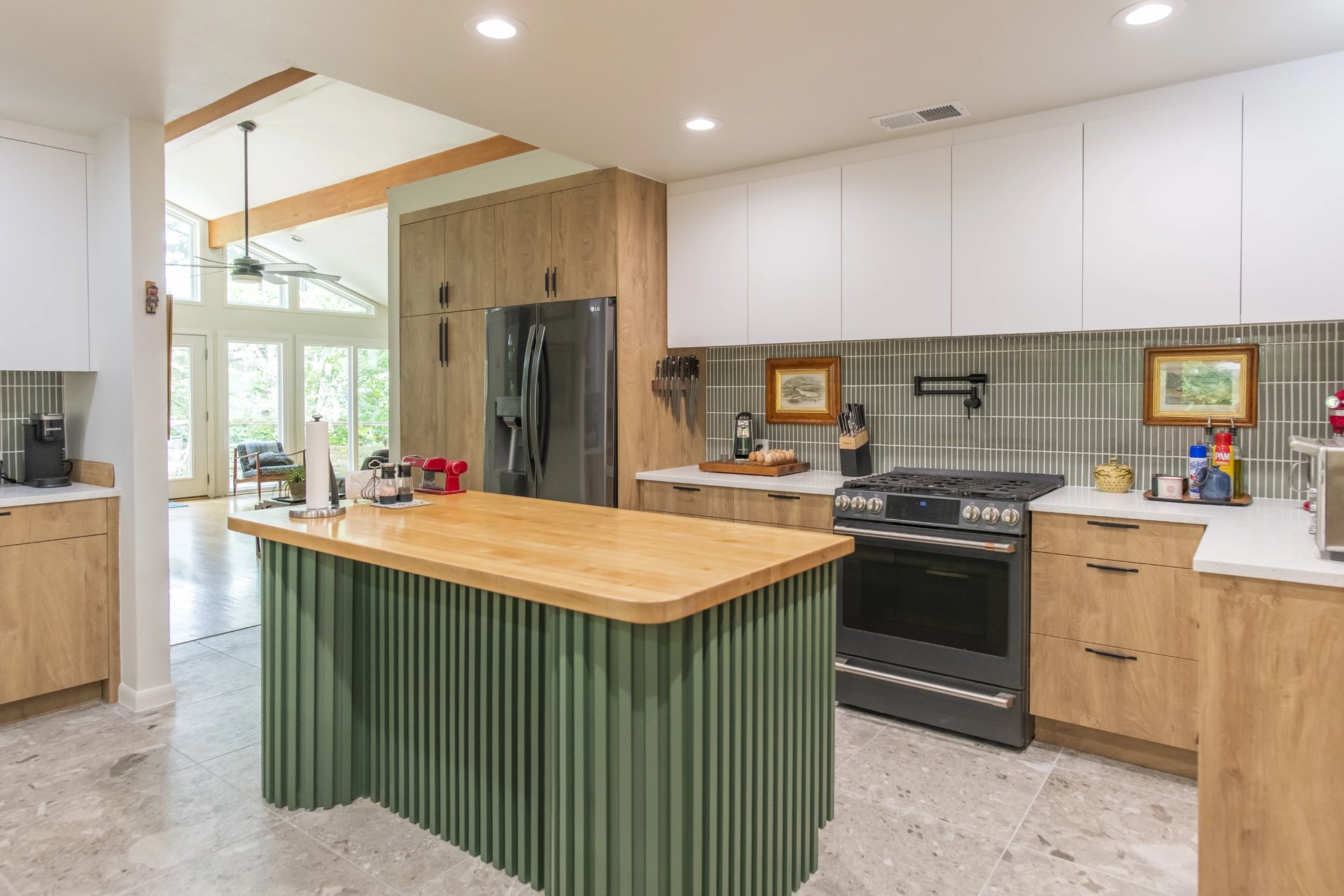
A complete kitchen remodeling project typically spans 8-14 weeks from demolition to final walkthrough in 2025. This timeline assumes no major structural surprises and reasonable material selections that don’t require extended custom fabrication. The first week involves demolition and any necessary structural modifications — perhaps removing a wall to create an open concept or reinforcing the floor for heavy stone countertops. Weeks two through four cover the rough-in work: new electrical circuits for high-powered appliances, updated plumbing lines, HVAC modifications, and possibly new windows or exterior door installations. The middle phase, weeks five through nine, brings cabinet installation, countertop templating and installation, backsplash tile work, and flooring. The final weeks involve appliance installation, finish electrical and plumbing fixtures, paint touch-ups, and the detailed completion work that transforms a construction site into a finished kitchen.
Bathroom renovations follow similar patterns but on compressed timelines. A master bathroom typically requires 6-9 weeks, while a guest bath might complete in 4-6 weeks. The difference reflects not just square footage but complexity — a master bath often includes custom shower enclosures with multiple body sprays, freestanding tubs with floor-mounted fillers, heated flooring, and more intricate tile work. The critical path usually runs through custom glass shower enclosures, which require precise measurements after tile installation and typically need 3-4 weeks for fabrication and installation from companies like Basco or local specialty fabricators.
Expert Tip: The single biggest timeline variable in 2025 isn’t construction work — it’s decision-making. We’ve tracked this carefully, and homeowners who make all their material selections before construction begins complete projects 30-40% faster than those who decide as they go. This means visiting showrooms and selecting everything from cabinet hardware to light fixtures during the design phase, not after drywall is hung. The two-week delay waiting for a homeowner to choose between three tile options creates a domino effect that can extend the entire project by a month.
Full home renovations require the most comprehensive timeline planning, typically spanning 4-8 months depending on scope. Unlike single-room projects, whole-home remodels benefit from simultaneous work in multiple areas, but they also require careful coordination to maintain livability. Many Dallas homeowners choose to move out during major renovations, which allows contractors to work more efficiently without daily disruptions. The phased approach — completing the master suite first, then moving to common areas, and finally tackling secondary bedrooms — works well for families staying in place but can extend the overall timeline by 20-30%.
Material lead times continue to influence project schedules in ways that surprise many homeowners. Custom cabinetry from quality manufacturers typically requires 8-12 weeks from order to delivery, which means these selections must be finalized during the design phase, long before demolition begins. Natural stone countertops like granite or quartzite need 3-4 weeks after template for fabrication and installation. Some specialty items take even longer — custom range hoods, particular light fixtures, or imported tile can require 12-16 weeks. Experienced design-build firms like 123 Remodeling build these lead times into project schedules from the beginning, ordering long-lead items early so they arrive precisely when needed.
Permit acquisition and inspection schedules also factor into realistic timelines. Dallas building permits for major renovations typically process in 2-4 weeks, and inspections must occur at specific construction milestones — rough-in, insulation, and final. Each inspection requires scheduling and potentially follow-up corrections, adding days or occasionally weeks to the overall timeline. Working with contractors who understand Dallas building codes and maintain good relationships with local inspectors helps minimize these delays.
Design Trends in 2025
Dallas design in 2025 reflects a distinctive aesthetic that balances Southern tradition with contemporary sophistication. Unlike coastal markets that chase every fleeting trend, Dallas homeowners have developed a more considered approach — embracing elements that enhance their lifestyle while maintaining long-term appeal. The result is interiors that feel current without being dated in five years, a quality that’s particularly important given the substantial investments these renovations represent.
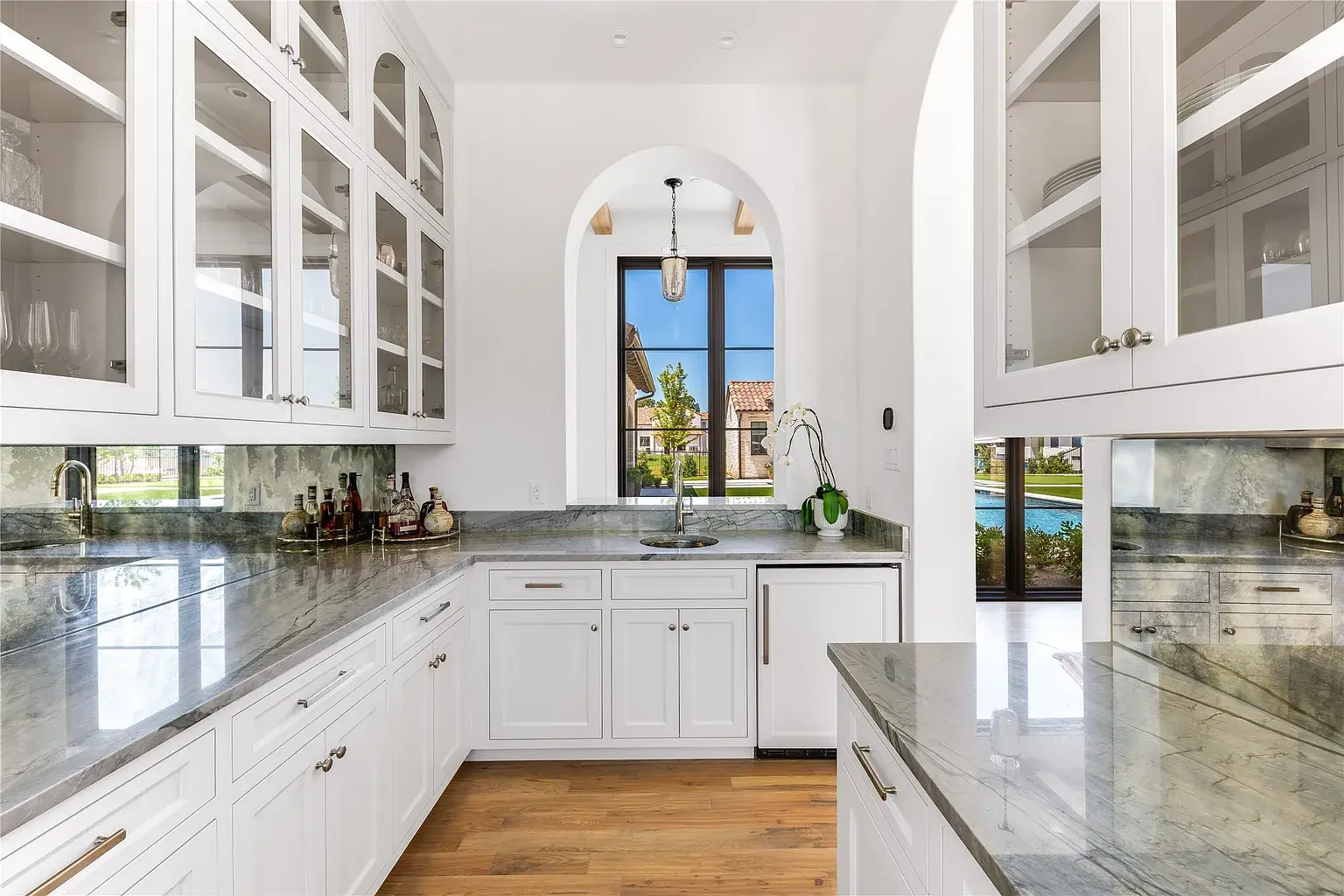
The most significant shift involves color moving away from the stark white-and-gray palette that dominated the past decade. Warm, complex neutrals have taken center stage — think greiges (gray-beiges) with subtle undertones, soft taupes, and creamy off-whites that create depth rather than sterile backdrops. Paint companies like Sherwin-Williams and Benjamin Moore report that their most requested colors in the Dallas market include Accessible Beige, Agreeable Gray, and Swiss Coffee — sophisticated neutrals that complement Texas’s strong natural light. Kitchen cabinetry follows similar patterns, with warm white and light wood tones overtaking cool grays, though deep colors like sage green and navy blue appear as accent elements on islands or in butler’s pantries.
Natural materials have moved from trend to expectation in 2025 Dallas remodels. Homeowners are gravitating toward materials that improve with age rather than degrade — solid wood flooring over laminate, natural stone backsplashes instead of synthetic alternatives, and authentic materials that tell a story. Wide-plank white oak flooring, often finished with natural oils rather than polyurethane, appears in projects across Southlake, Prosper, and Westlake. Quartzite countertops, which offer the beauty of marble with superior durability, have surged in popularity for homeowners who want natural stone performance. According to the Marble Institute of America, quartzite sales in luxury remodeling projects increased 40% in 2024-2025 as homeowners discovered this option.
Kitchen design has evolved toward what designers call “working luxury” — spaces that look beautiful but function flawlessly for serious cooking and daily family life. This translates to oversized islands with 42-48 inch overhangs for seating, professional-grade appliances that aren’t just for show, and storage solutions that maximize every cubic inch. Appliance packages increasingly mix brands strategically rather than matching everything — perhaps a Wolf range with a Bosch dishwasher and Sub-Zero refrigeration, selecting each category’s best performer. Integrated appliances that disappear behind cabinetry panels have become standard in high-end projects, creating the clean, furniture-like appearance that Dallas homeowners prefer.
Expert Tip: The design element that most dramatically impacts how a kitchen feels isn’t the cabinetry or countertops — it’s the lighting layers. We specify a minimum of four distinct lighting types in every kitchen: ambient (recessed ceiling fixtures), task (under-cabinet LED), accent (pendant or chandelier over island), and decorative (architectural features like toe-kick lighting or interior cabinet illumination). This layering creates depth and allows homeowners to adjust the mood from bright and energetic during meal prep to warm and intimate during evening entertaining. Yet it’s the aspect many homeowners want to value-engineer out until they experience the difference.
Bathroom design in 2025 emphasizes the spa-like retreat concept, but with a practical Dallas twist. Expansive walk-in showers with curbless entries, multiple shower heads, and floor-to-ceiling tile have become standard in master baths, often replacing traditional tub-shower combinations entirely. When tubs appear, they’re typically freestanding statement pieces positioned to capture natural light or create a focal point, rather than standard alcove installations. The wet room concept — where the entire bathroom floor slopes to a central drain and the shower area isn’t fully enclosed — has gained traction in luxury renovations, particularly in Highland Park and University Park where homeowners appreciate European-influenced design.
Technology integration has become more subtle and sophisticated. Rather than showcasing smart home features prominently, 2025 design embeds them invisibly. Lighting controlled through wall-mounted Lutron panels or smartphone apps, heated floors with programmable thermostats, bathroom mirrors with integrated lighting and defogging systems, and motorized window shades all operate seamlessly without cluttering sightlines with obvious technology. Voice control through systems like Control4 or Crestron appears in higher-end projects, allowing homeowners to adjust lighting, temperature, and even music without touching anything.
The open concept remains popular but has evolved into what designers call “broken plan” living — spaces that flow together but include subtle delineations that create distinct zones without walls. This might involve a ceiling height change, flooring transition, or strategically placed cabinetry that defines the kitchen boundary while maintaining visual connection to living areas. This approach addresses the common complaint about first-generation open concepts: they created one large, undefined space that lacked intimacy and made furniture arrangement challenging.
Design and Planning Decisions require dedicated time and attention, ideally completed before signing a construction contract. Visit multiple showrooms — tile distributors, cabinet showrooms, plumbing fixture suppliers — and take photographs, collect samples, and gather pricing information. Create a digital folder organizing your selections by category: flooring, countertops, cabinetry, fixtures, hardware, lighting, and appliances. This becomes your reference throughout the project. Work with your design-build firm to finalize drawings and specifications, ensuring every detail is documented before construction begins. Understand that changes after construction starts cost significantly more due to ordering delays, restocking fees, and workflow disruptions.
Contact our team for a comprehensive consultation and detailed estimate. We’ll help you develop a remodeling strategy that aligns with your vision, timelines, budget and goals.